





























3D Printing with Moon Dirt Could Unlock the Future of Lunar Habitats!

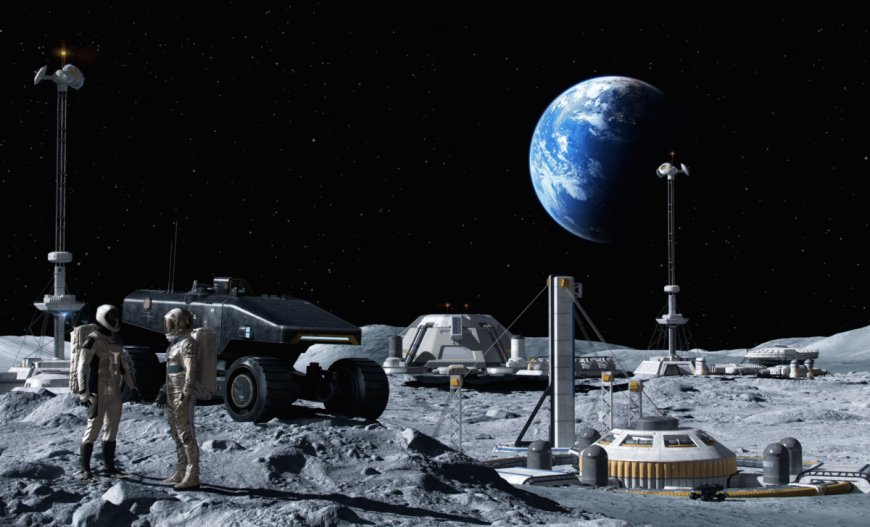
What if the moon’s own soil could be used to build the structures needed for human survival? A recent study published in Acta Astronautica explores how 3D printing with lunar soil could make this possible. Researchers at Ohio State University have developed a method to turn simulated moon dust into durable, heat-resistant materials, offering a new path toward sustainable lunar colonies and reducing our reliance on Earth-based resources.
The Sensitivity of Lunar Soil to Environmental Conditions
One of the key insights of the study, published in Acta Astronautica, revolves around how the lunar soil simulant behaves when subjected to different environmental conditions. The research team, led by Sizhe Xu, explored the impact of various feedstocks, such as metal and ceramics, in the printing process. The results showed that the final material’s properties were extremely sensitive to the environment. As Xu stated,
“By combining different feedstocks, like metal and ceramics, in the printing process, we found that the final material is really sensitive to the environment. Different environments lead to different properties, which directly affect the mechanical strength and the thermal shock resistance of certain components.”
The quality of the material produced during the 3D printing process varied greatly depending on factors like the type of surface onto which the lunar soil was printed. For example, researchers found that the simulant adhered better to alumina-silicate ceramic than to other surfaces, such as stainless steel or glass. This finding is significant because it suggests that the surface environment plays a crucial role in ensuring the structural integrity of the printed components.

Overcoming Space’s Unique Environmental Challenges
Building structures on the moon presents a unique set of challenges that are difficult to replicate in Earth-based laboratories. The harsh vacuum of space, along with dust, extreme temperature fluctuations, and other factors, makes it hard to simulate the exact conditions that would be encountered in space.
“There are conditions that happen in space that are really hard to emulate in a simulant,” said Sarah Wolff, senior author of the study and an assistant professor in mechanical and aerospace engineering at Ohio State University. “It may work in the lab, but in a resource-scarce environment, you have to try everything to maximize the flexibility of a machine for different scenarios.”
These challenges highlight the complexity of developing 3D printing systems that can function effectively in space. The study emphasizes the need to design printing systems that are versatile and adaptable to different lunar environments. In particular, it suggests that future printing systems may need to be powered by solar energy or other hybrid power architectures to ensure they can operate independently of Earth-based resources.
The Promise of In-Situ Resource Utilization (ISRU)
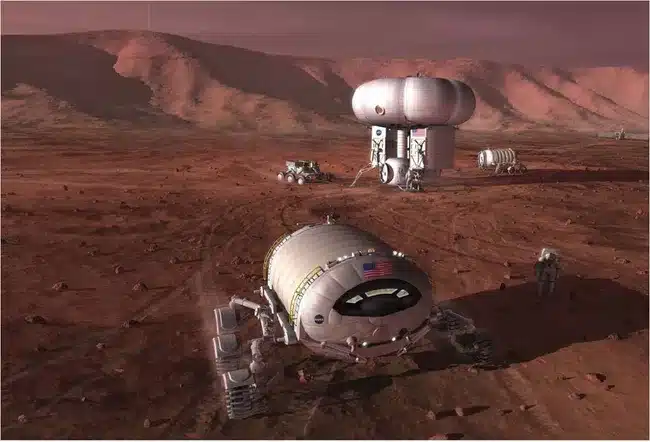
One of the key benefits of using lunar soil in 3D printing is the concept of In-Situ Resource Utilization (ISRU), using local resources for construction instead of transporting materials from Earth. This would greatly reduce the cost and complexity of lunar missions. As Wolff explained,
“There are so many applications that we’re working toward that with new information, the possibilities are endless.”
The ability to print tools, habitats, and other structures directly on the lunar surface would help astronauts be more self-sufficient during extended missions, particularly as they prepare for deep space exploration.
The potential applications of this technology extend beyond space exploration. By developing more efficient manufacturing processes that require fewer resources, researchers believe they can help address material shortages on Earth as well.
As Xu noted, “If we can successfully manufacture things in space using very few resources, that means we can also achieve better sustainability on Earth.”
This could lead to innovations in sustainable manufacturing techniques that could have a profound impact on industries back home.
Improving Flexibility for Future Lunar Missions
The ultimate goal of this research is to enhance the flexibility and functionality of 3D printing systems for future lunar missions. According to the study’s authors, adapting the printing systems to perform under the unique conditions of space is crucial for long-term success.
“To that end, improving the machine’s flexibility for different scenarios is a goal we’re working really hard toward,” said Xu.
This flexibility would allow astronauts to rapidly adapt to different challenges and create necessary resources, tools, and habitats with limited materials.
As NASA’s Artemis program aims to establish a permanent human presence on the moon, technologies like this one will play a critical role in ensuring the success of long-duration missions. The ability to construct buildings and tools on the lunar surface would minimize the need for resupply missions, making lunar bases more sustainable and less dependent on Earth.
Enjoyed this article? Subscribe to our free newsletter for engaging stories, exclusive content, and the latest news.
What's Your Reaction?
 Like
0
Like
0
 Dislike
0
Dislike
0
 Love
0
Love
0
 Funny
0
Funny
0
 Angry
0
Angry
0
 Sad
0
Sad
0
 Wow
0
Wow
0