










































Working Cray-1 supercomputer replica packs 30 vintage Mac Minis and 1.5 TFLOPS

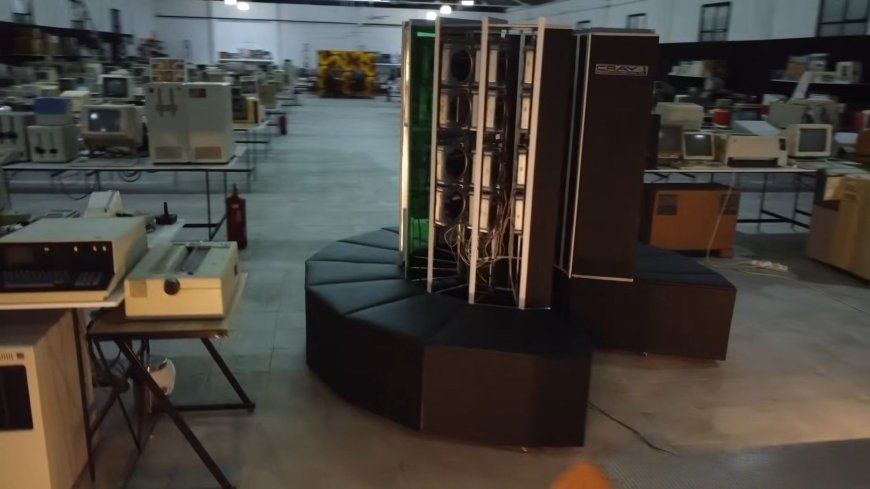
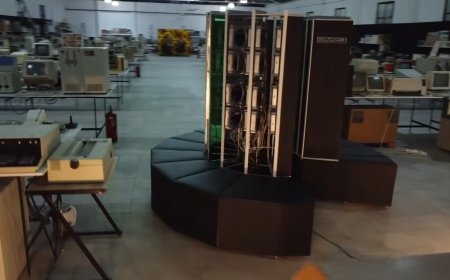
Spain’s Museo de Historia de la Computación unveiled its 18-month-long project to commemorate the 50th anniversary of both the Cray-1’s first operational use in Los Alamos and Apple’s founding. The replica uses 30 Mac Minis, 25 dual-core i5 units, and five quad-core i7 units from 2012-2014, totaling 70 cores that produce a peak of 1.5 TeraFLOPS; a theoretical 9,375x jump from the original Cray-1's 160 MegaFLOPS. After one quad-core machine went offline, the current reported peak sits at 1.3 TeraFLOPS.
The original Cray-1 is considered to be the first commercially successful supercomputer, with 80 systems sold in its heyday. Science and engineering institutions sought it out to churn through gigantic datasets for uses ranging from intense weather prediction and aerodynamics to nuclear physics and structural analysis, among many others.
It was very efficient at these computations thanks to vector processing, a computing technique we take for granted nowadays. Vector computing made this supercomputer so powerful; while most computers still handled tasks one instruction at a time, the Cray-1 could process chunks of numbers in parallel, saving a huge amount of time.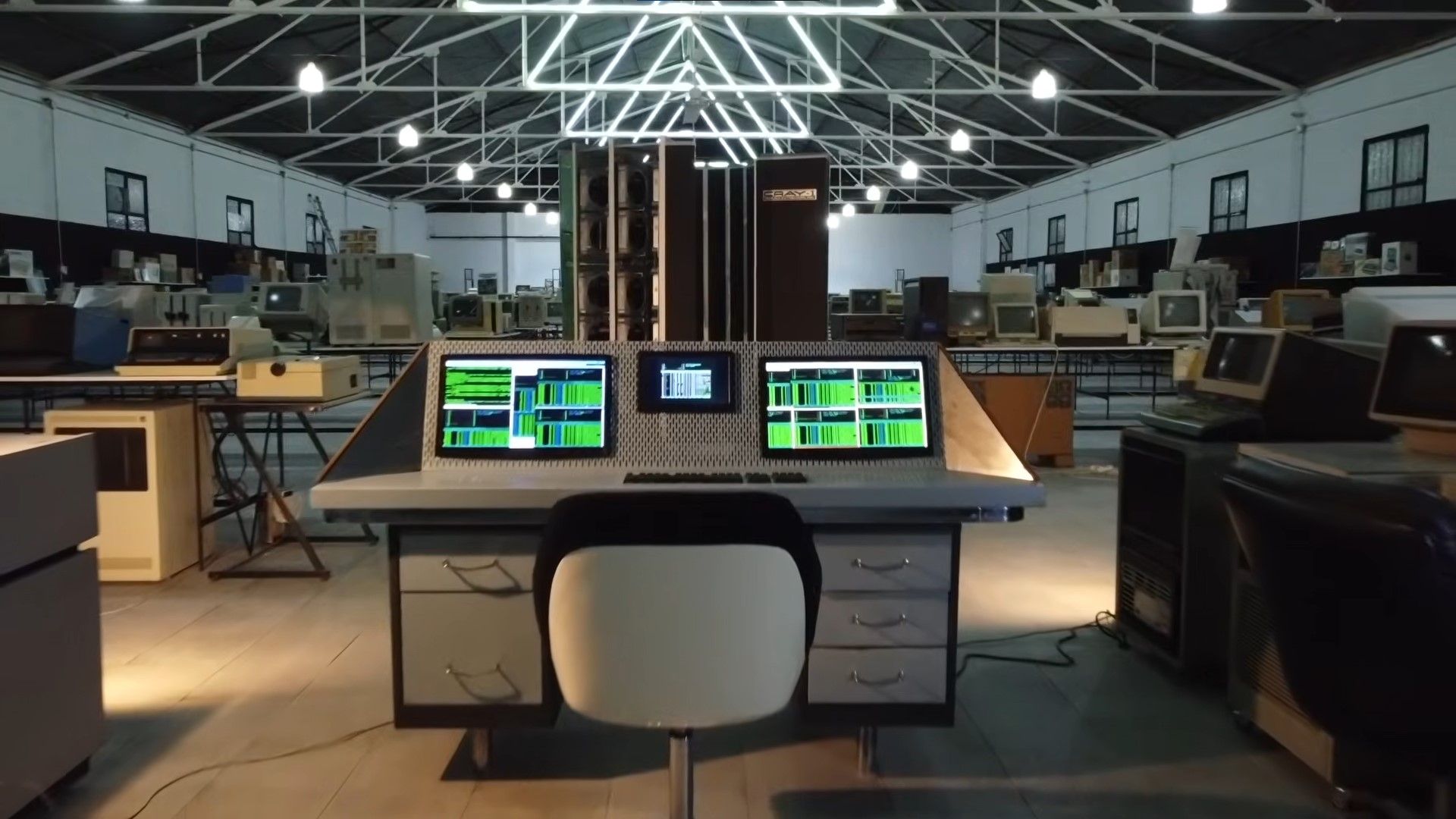
The replica has 70 cores from the 30 Mac Minis, and of course, vector processing has since become the norm and a standard feature of modern CPUs; jumping from a single core to 70 “modern” cores and 50 years' worth of innovation is what Museo de Historia de la Computación wants to showcase in this project. It is not only a replica, but a representation of how far technology has come.
The original version was cooled by a network of refrigerant lines that led to 20-ton refrigeration compressors in a separate room, while the replica is cooled passively through a convection-tower design and is extremely quiet, with only the Ethernet switches making the most noise. The museum plans to use silent switches to make it even quieter.
For visitors to see it in action, the museum also created a retro-style control terminal, akin to what you’d see in old movies: a large metal desk with a keyboard in the middle and multiple screens embedded into a panel spanning the desk, with angled features flanking the screens, completing the 70s control terminal silhouette.
On the screen, you can see it churning away at large matrix multiplication problems, the sort of thing it’s good at. Surprisingly, the team behind it realized they could run the supercomputer on macOS Mojave, which supports MPI (Message Passing Interface), allowing the instructions to spread across several Mac Minis for parallel computing. That's not the end of it, though: the museum plans to start a crowdfunding campaign and buy 70-80 M4 Mac Minis to fill the remaining slots, aiming to enter the TOP500 supercomputers list.
Plan your trip if you want to see it; it’s on permanent display, and the museum is open to the public on Saturdays from 11:30 AM-2:00 PM, but it doesn’t allow tours without a guide, and it's closed during summer, Christmas, January, and February.
What's Your Reaction?
 Like
0
Like
0
 Dislike
0
Dislike
0
 Love
0
Love
0
 Funny
0
Funny
0
 Angry
0
Angry
0
 Sad
0
Sad
0
 Wow
0
Wow
0