











































AMD attempted to crush the 'Megahertz myth' with its Performance Rating system on this day 25 years ago

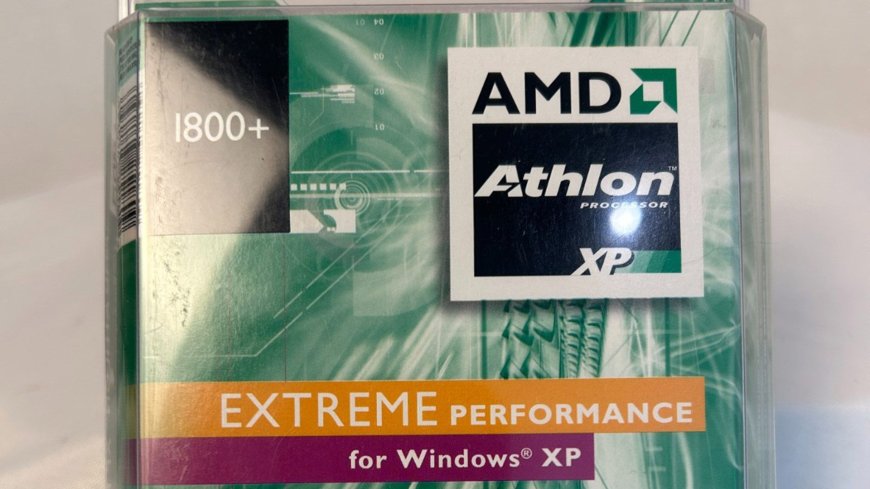
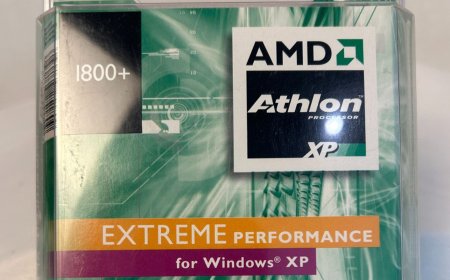
A quarter century ago today, AMD launched its AMD Athlon XP processor family. These were highly performant processors based on the firm’s latest Palomino core, but ran at lower raw clock speeds than Intel rivals. Facing a marketing imbalance between perceived and actual performance, AMD mounted a serious campaign to explode the 'megahertz myth' with this generation of CPUs. Thus, it introduced new Athlon XP processors with a Performance Rating (PR) designation, alongside a slogan insisting “Performance matters more than MHz.”
Intel, with its Pentium 4 processors, was clearly winning the MHz race at the time, while a CPU’s clock speed had long been established by marketers as a key performance metric. Unfortunately for AMD, its CPUs of the era didn’t hit such high clocks, even though the application and gaming performance was just as good (if not better) than Intel's.
Thomas Pabst's view
Our tests from October 2001 noted that AMD wisely undersold its chips, using the newly devised PR naming system. Anything less and it would have faced strong opposition and derision. Our tests clearly showed that a new “AthlonXP 1800+ is able to beat Intel's flagship Pentium 4 2 GHz in the majority of benchmarks,” wrote the original Tom, Thomas Pabst, in a 13-page feature about AMD’s newest CPUs. Moreover, it was observed that “AthlonXP at 1533 MHz is able to reach or even beat Pentium 4 running at an almost 33% higher clock speed.” Pabst concluded that AMD’s clocks/performance situation forced this concerted stand against the MHz myth.
As we broke the news about AMD’s Performance Rating system, some almost straight-away alluded to it being a ‘Pentium Rating’ system, but it was very early days. We didn’t know whether it would become a long-term success. It was known that AMD planned to establish an independent institution to create a new performance measure that is fairer and more realistic than the current MHz system in the following year. But, of course, Intel wouldn’t be interested in validating that. Pabst concluded that “I might not like it too much,” but admitted AMD had little alternative marketing-wise in the Pentium vs. Athlon era at the beginning of the millennium.
Please stop, it hertz
The AMD PR system would be abandoned roughly five years after it was initiated. Subsequent AMD (and Intel) architectures stopped the rating from making practical sense as the market evolved. For example, Intel’s big MHz advantage was lost in the transition from Pentium 4 Netburst to Pentium M/Core chips. Then, the Athlon 64 was so well received by reviewers and enthusiasts that AMD probably felt it might be wise to finish with its inferiority complex PR system that tied it to its obvious rival. Lastly, by the end of the AMD PR era, the marketing fight was clearly going multi-core. CPU marketing and naming completely sidelined any hint at CPU clock speeds later in the noughties.
What's Your Reaction?
 Like
0
Like
0
 Dislike
0
Dislike
0
 Love
0
Love
0
 Funny
0
Funny
0
 Angry
0
Angry
0
 Sad
0
Sad
0
 Wow
0
Wow
0