


A spy took out Nvidia’s CEO. Here’s how America still wins the AI race

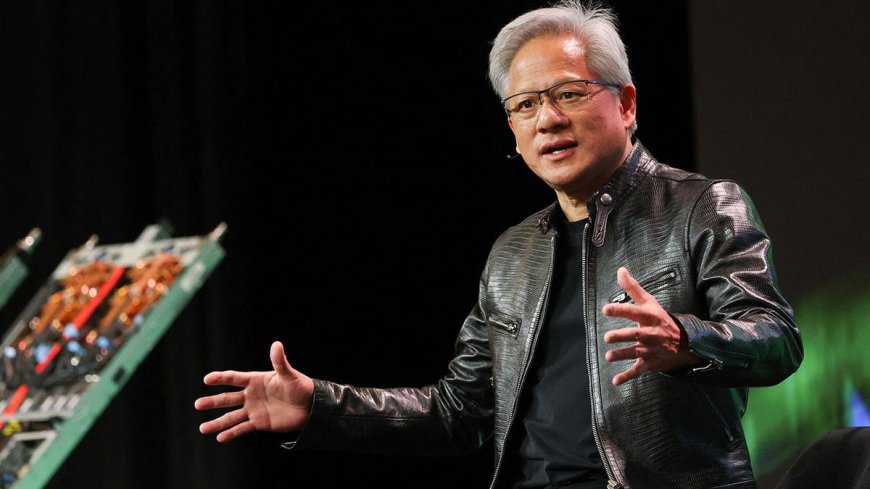
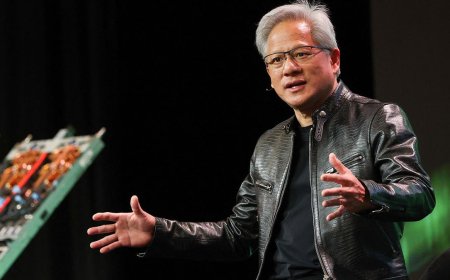
With Nvidia CEO Jensen Huang’s resignation on Thursday, an accused Chinese spy has taken out the No. 1 player on America’s AI roster. This is worse than a first-and-goal fumble. It’s a body blow that puts the U.S.-China AI race in flux.
Chinese President Xi Jinping knows that if he doesn’t stop the momentum soon, America’s lead in AI will forestall his country’s plans to take over and become a world hegemon.
If Nvidia stumbles without Huang, China has us right where it wants us. Nvidia was the first company to surpass the $5 trillion milestone in market capitalization. Fellow CEOs like Michael Dell lauded him as a "great partner and friend, a true leader and visionary of the AI age" just last spring. Yet reports of Nvidia chip smuggling led Singapore to launch an investigation in 2025.
SOUND OFF ON JENSEN HUANG'S RESIGNATION FROM NVIDIA
Here's what America must do to stop China’s assault.
1. Wake up to the pervasive China threat. It comes as no surprise that an accused Chinese spy targeted Jensen Huang. Americans have to wise up.
The Wall Street Journal reported back in 2022 on China’s attempts to influence state and local government leaders and officials. Americans in the defense sector already know to steer clear of inquisitive strangers at trade shows.
Sad to say, but Chinese citizens should be treated cautiously. Due to China’s national security laws, every Chinese citizen operating abroad, whether a high-flying executive or a student at a U.S. university, is obliged to give the Ministry of State Security information, if asked.
US ATTORNEY WARNS CHINESE ESPIONAGE IS 'EXTREMELY PERVASIVE,' SAYS BEIJING 'PLAYING THE LONG GAME'
2. Encourage the competitors.
Nvidia’s market share is massive, but it is not the only game in town. Top rival AMD—whose processors power El Capitan, the supercomputer that claimed the world's No. 1 spot upon its debut—is a major competitor. Meanwhile, tech giants like Google, AWS, Meta, and Microsoft are increasingly deploying their own "custom silicon" in-house and via cloud services, part of a custom AI chip market projected by some analysts to grow from $32 billion in 2026 to $132 billion by 2035. As Google rolls out newer generations of its Tensor Processing Units (TPUs) to challenge Nvidia’s dominance, hyperscalers are actively working to reduce their reliance on Nvidia's hardware.
WINNING THE AI RACE MEANS BEATING CHINA ON INNOVATION, COST AND TRUST
"Nvidia is investigating its own CEO. Google is busy building the chips that could take its customers," wrote Jared Blikre at Yahoo Finance on Monday, after Google released two new tensor processing units to do battle with Nvidia’s chips.
3. Don’t rock the boat on investment. The U.S. ability to deploy capital for startups, mergers and other investments is a key advantage over China. Huang was a financial engine for AI. In China, the state invests; here, it takes Big Tech players to fuel the AI ecosystem. One of the scariest aspects of the uncertainty at Nvidia centers on Huang’s financial support for many other customers and partner companies in the AI ecosystem.
THE BIGGEST THREAT IN AMERICA'S RACE WITH CHINA ISN'T BEIJING, TECH EXECUTIVE WARNS
Let’s start with a few examples of how Nvidia uses its cash: a $3 billion purchase of Meta stock and a $105 billion guarantee for OpenAI’s leases for data centers in Ohio. Colette Kress is stepping up from her role as CFO to serve as Nvidia’s interim CEO, so she will have good visibility into these deals. Cash needs to keep flowing, and the U.S. must resist overly restrictive regulations.
4. Win global market share. Clearly, Huang wanted to fight for China’s AI chip market. The backstory on Nvidia and China is complicated. Nvidia held a 95% market share in China in 2022 until Xi Jinping’s self-reliance policies and U.S. export bans turned the tables. Nvidia’s share fell to 40% in 2025 and is forecast to fall to 8% in 2026, as reported by Fast Company. "If the United States doesn’t want to partake, participate in China, Huawei has got China covered, and Huawei has got everybody else covered," CEO Jensen Huang said in a June 2025 interview with CNBC.
CLICK HERE FOR MORE FOX NEWS OPINION
Sales and market share were not always integral to national security policy. Back in the Cold War, it was enough to ban exports of sensitive items. That won’t work now. Chinese companies like Huawei are eager to set up their AI tech stacks and data centers to score market share and boost Chinese innovation.
The AI race is one the U.S. government cannot win by itself. We’ll see if Nvidia can still carry the torch.
What's Your Reaction?
 Like
0
 Dislike
0
 Love
0
 Funny
0
 Angry
0
 Sad
0
 Wow
0