



The Facts on ICC’s Karim Khan’s Dismissal after Court’s Arrest Warrant for Netanyahu

 By Jonathan Cook,
A fact-finding investigation over more than a year in which thousands of pages of evidence were evaluated in detail by three senior judges concluded there was no evidence to suggest any kind of misconduct by Khan… Netanyahu & Lindsey Graham conspired to use sex claims against Khan to delay warrants (2 articles)
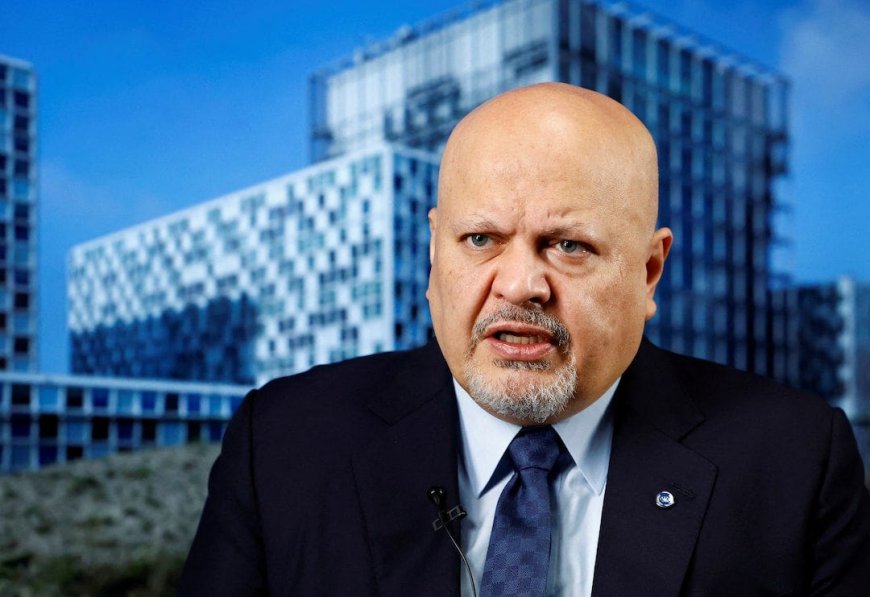
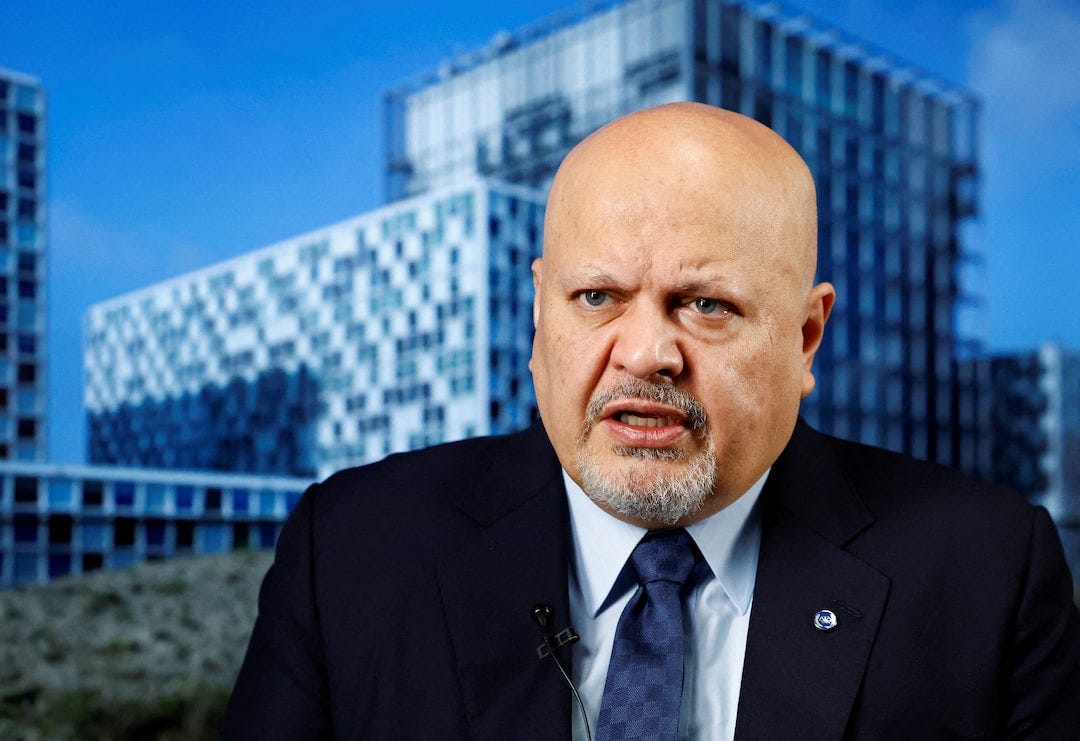
The most important question we should be asking after Karim Khan’s dismissal last week as chief prosecutor of the ICC – the international war crimes court in The Hague – is not whether he is guilty of “sexual misconduct” against another staff member, identified as “Sarah”. That can only be decided through a legal process – one, let us note, that has already taken place. A fact-finding body carried out a lengthy investigation of Sarah’s allegations over more than a year; its thousands of pages of evidence were then evaluated in detail by three senior judges. Though you would not know it from the media coverage, they concluded that there was no evidence to suggest any kind of misconduct by Khan, sexual or otherwise. Strangely, that determination was largely confirmed by an extraordinarily deferential “exclusive” CNN interview with Sarah, aired earlier this month. She declined to give any meaningful details of what Khan had allegedly subjected her to, and celebrity interviewer Christiane Amanpour delicately avoided pressing her for any clarification.
Covert war
Khan is not the first ICC chief prosecutor to face extreme pressures – and, as with Khan, those pressures surfaced at the very moment Khan’s predecessor tried to take on Israel over its war crimes. Fatou Bensouda faced a “covert war” waged against her by Israel for the best part of a decade, according to an investigation by the Guardian in May 2024, just as Khan issued his arrest warrant for Netanyahu. The Guardian’s report, published nearly three years after Bensouda had completed her nine-year term at the ICC, revealed that, during that time, she had faced threats to herself and her family, the monitoring of her communications, and an intimidating visit to her home. More recently, Bensouda has confirmed these accounts in an interview with Al Jazeera. Bensouda notes that she repeatedly reported Israel’s campaign of intimidation to the Dutch authorities, but they did nothing to investigate the threats or protect her. She also says certain “authorities” – she does not name them – warned her that she was going too far in investigating Israeli crimes and that “you could be harmed or you could be killed, or family members could be harmed in some way.” https://www.youtube.com/watch?v=d8mhSUGhuC4&source_ve_path=MjM4NTE&embeds_referring_euri=https%3A%2F%2Fprepareforchange.net%2F The campaign of threats – instigated by Yossi Cohen, then the director of Israel’s spy agency, Mossad – intensified as Bensouda considered whether to open a formal investigation into Israeli war crimes and crimes against humanity in the illegally occupied Palestinian territories. Israel’s crimes against the Palestinian people, we should remember, predate – by decades – Hamas’ attack on 7 October 2023. In fact, though no one is supposed to mention it, Israel’s sustained crimes of occupation are the self-evident cause of that Hamas attack. An Israeli source told the Guardian that “the Mossad’s objective was to compromise the prosecutor or enlist her as someone who would cooperate with Israel’s demands”– that is, scrap the ICC’s investigation into Israeli crimes. Another source admitted that Cohen was acting on Netanyahu’s instructions. During one contact, Cohen reportedly issued a Mafia-style threat to Bensouda: “You don’t want to be getting into things that could compromise your security or that of your family.” The Guardian reported that the Mossad “took a keen interest in Bensouda’s family members and obtained transcripts of secret recordings of her husband, according to two sources with direct knowledge of the situation. Israeli officials then attempted to use the material to discredit the prosecutor”. The paper also noted that there were fears among senior ICC officials that “Israel had cultivated sources within the court’s prosecution division” – the division Khan would inherit from Bensouda. Cohen was described as “stalking” Bensouda, and personally “ambushed” her in a hotel room in New York in 2018. Afterwards he repeatedly phoned her, in a threatening manner that was said to have escalated over time. When Bensouda asked Cohen how he had obtained her phone number, he reportedly replied: “Did you forget what I do for a living?” According to the Guardian:On one occasion, Cohen is said to have shown Bensouda copies of photographs of her husband, which were taken covertly when the couple were visiting London. On another, according to sources, Cohen suggested to the prosecutor that a decision to open a full investigation would be detrimental to her career. Between 2019 and 2020, the Mossad had been actively seeking compromising information on the prosecutor and took an interest in her family members. The spy agency obtained a cache of material, including transcripts of an apparent sting operation against her husband.Israel used the materials to mount a “smear campaign” against her, but one that ultimately proved unsuccessful.
Concerted backlash
When Khan took up the role of ICC chief prosecutor in June 2021, he proved reluctant to pick up where Bensouda had left off on the Palestine case. Presumably, he was only too aware of the retaliation from Israel against her. Bensouda had announced in December 2019 that she had grounds to open a full criminal investigation into allegations of war crimes in Gaza, the West Bank and East Jerusalem. However, in the face of a concerted backlash from western states, she delayed opening the investigation. She first sought a ruling from a pre-trial chamber of ICC judges – presumably in the hope it would serve as some kind of insurance policy – on whether the court had jurisdiction over the occupied Palestinian territories. By February 2021 the judges confirmed what was already self-evident. The court did have such jurisdiction because Palestine had been signed up to the court since 2015. Bensouda stepped down a few months later. The door was now open for Khan to prosecute Israeli officials for war crimes. However, the new chief prosecutor gave every appearance – perhaps understandably – of preferring to sit on his hands. It was not just Israel that had been fearsomely opposed to its officials being tried for war crimes. Washington was equally incensed at the prospect – sometimes, it seemed, more so than over the possibility that US officials might also face arrest warrants for crimes committed by the US military in Afghanistan and Iraq. Between 2019 and 2020, during Trump’s first presidency, the US imposed severe visa restrictions and financial sanctions on Bensouda. Mike Pompeo, then US secretary of state, linked the sanctions to the Palestine case: “It’s clear the ICC is only putting Israel in [its] crosshairs for nakedly political purposes.” Khan might well have avoided pursuing Israel indefinitely had it not been for the events that followed 7 October 2023. Israel’s mass slaughter of Palestinian civilians in Gaza, its devastation of the enclave’s homes and infrastructure, and its starvation of the entire population were actions so criminally abhorrent that UN agencies, major human rights groups and Holocaust scholars were soon all in agreement that they amounted to genocide. In May 2024, Khan announced arrest warrants against Netanyahu and Gallant, as well as three Hamas leaders subsequently killed by Israel.Tsunami of threats
Shortly before Khan made that announcement, 12 senior US Senators had sent a threatening letter to the ICC: “Target Israel and we will target you.” The letter ended: “You have been warned.” Describing Israeli and US sovereignty as inseparable, the senators reminded Khan that Washington had demonstrated “the lengths to which we will go to protect [our] sovereignty.” A 2002 law, popularly known as “The Hague Invasion Act”, authorises the US president “to use all means necessary and appropriate” to bring about the release US persons and any allies imprisoned or detained by the ICC. Those allies, it goes without saying, include Israeli leaders. Such threats, it should be noted, are a violation of Article 70 of the Rome Statute. Following the issuing of the arrest warrants, there followed a tsunami of similar threats – and presumably more that have yet to become public – against Khan and the ICC. https://x.com/AlArabiya_Eng/status/2080723625800351847?ref_src=twsrc%5Etfw%7Ctwcamp%5Etweetembed%7Ctwterm%5E2080723625800351847%7Ctwgr%5Ec95cf55894c73edd9918da3b97a6cec39ffa2a6b%7Ctwcon%5Es1_&ref_url=https%3A%2F%2Fwww.palestinechronicle.com%2Fthey-target-you-and-your-family-what-karim-khan-said-just-before-his-dismissal%2F A British-Israeli lawyer within the ICC – one known to have ties to Netanyahu’s legal adviser – warned Khan “they will destroy you and they will destroy the court” if the warrants were not rescinded. He urged Khan to “climb down the tree” and drop the case. The UK’s foreign secretary of the time, David Cameron, phoned Khan to tell him Britain would defund the court and withdraw from the Rome Statute that founded the ICC if Khan did not back down. Cameron warned Khan that he was “on the brink of making a huge mistake” and urged him to “take a step back and consider things”. He added that applying for arrest warrants for Israeli officials was tantamount to “dropping a hydrogen bomb”. Meanwhile, Trump issued an executive order imposing aggressive financial sanctions against Khan and other ICC officials, including several of its judges. Khan himself received warnings that Israel’s Mossad was continuing its operations in The Hague, where the ICC is located, to monitor and compromise the court’s investigators as they compiled evidence on Israel – just as it had done earlier under Bensouda. Khan publicly stated that retaliatory threats and intimidation were explicitly targeting members of his own family.Untouchable criminals
What conclusions should we draw from all of this? Quite aside from the matter of whether Sarah’s allegations of “sexual misconduct” are true or not, it is clear that Israel and the US have been digging for dirt – and apparently ready to fabricate such dirt – on any chief prosecutor who tries to hold them to account for their crimes. Both have indicated that they are ready to manipulate legal and political processes to ensure the outcome they desire: that they remain untouchable. We have a template for how this plays out. Julian Assange, founder of the whistle-blowing site Wikileaks, published details in 2010 of US and British war crimes in Afghanistan and Iraq. Almost immediately he found himself entangled in accusations of sexual misdemeanours – in his case in Sweden – that were similarly amplified by an uncritical western media. Assange faced years in various forms of confinement while the US and UK pressured Sweden to keep alive an investigation against him Swedish prosecutors at least twice sought to drop for lack of credible evidence. In fact, the US and UK never wanted the evidence tested – they were quite happy with a permanent, unresolved “investigation” – precisely because they knew it would have been unlikely to withstand judicial scrutiny. The point was simply to generate constant headlines about “rape”, turning Assange into a pariah, justifying his effective disappearance from public life, severely weakening Wikileaks as a whistleblowing platform, deflecting attention from the all-too-real crimes committed by the US and Britain, and paving the way to a political show trial to extradite him to the US on entirely confected “espionage” charges. This has been repeated in the case of Khan and the ICC. In Khan’s case, the evidence was tested and found inadequate. So the legal process has been replaced by a flagrantly political one. Khan has been turned into a legal pariah, even stripped of his right to work as a lawyer in the UK by the British Bar Association. The ICC has been further weakened, just as Israel and the US have expressly stated they wanted it to be. Marco Rubio, Trump’s secretary of state, has recently launched an official campaign to dismantle the ICC “brick by brick”. He says: “Now they [the ICC] are going to see the consequences”. Consequences of what? Of seeking to enforce international law against a key US client state. Meanwhile, accountability for the all-too-real crimes being committed by Israel in Gaza, Lebanon and the West Bank – and actively supported by western states like the US, Germany and Britain – recedes yet further into the background. As each brick protecting the ICC is dismantled, a brick is added to the wall of protection around Netanyahu and Israel’s genocidal war machine. Israel, meanwhile, is barely concealing that it has been masterminding the effort to destroy the ICC. According to Guy Azriel, the diplomatic correspondent for i24 News, Israeli foreign Minister Gideon Sa’ar “oversaw a dedicated task force and employed intensive diplomatic efforts aimed at securing Khan’s removal from office”. Hillel Neuer, director of the Israel apologist group United Nations Watch, cheered what he called “our campaign to remove” Khan, and warned Francesca Albanese, the UN’s legal expert on the occupied Palestinian territories, “you’re next”. Like Khan, Albanese has been searching for practical, legal ways – not just rhetoric – to hold Israel and its western allies to account for the crimes in Gaza.Predatory states
The ICC claims its work will not be affected by Khan’s removal and that the arrest warrants against Netanyahu and Gallant will still be pursued under new stewardship. That seems doubtful. Israel and the US are cranking up the intimidation of the ICC, which has no tools – beyond the support of members states – to enforce its rulings or protect itself from the hostility of a rogue superpower. Currently the court appears paralysed, allowing Israel to muddy the waters with interminable, and vexatious, appeals against the arrest warrants. Any lawyer who takes up the post of ICC chief prosecutor will be only too aware of the fate that befell Khan and the campaign of intimidation against Bensouda as soon as each tried to enforce accountability on Israel and its western patrons. It will take a very brave individual indeed to renew that task. Khan’s successor will understand that, in any further confrontation with Israel and Washington, the US will not hesitate to crush the ICC and, with it, remove the only effective restraint on criminality by powerful states. More likely, however, the Assembly of States Parties – the political body that ousted Khan – will privately require from his successor reassurances that the new chief prosecutor reliably defer to the principle of Israeli and western impunity. Only someone less willing to ruffle feathers stands any chance of being appointed. That was the clearest of messages sent by the Assembly when a majority of member states voted to be rid of Khan. The short-lived experiment in creating a mechanism for enforcing international law is over. We are back to the law of the jungle. Hundred of thousands of people around the world – more likely millions – will now find themselves even more exposed to the criminal actions of predatory states. Unlike Khan’s accuser, they are unlikely to ever get their day in court.Netanyahu and Lindsey Graham conspired to use sex claims against Khan to delay warrant
By Imran Mulla, reposted from Middle East Eye, July 29, 2026 US Senator Lindsey Graham and Benjamin Netanyahu conspired to use sexual misconduct allegations against the International Criminal Court’s (ICC) chief prosecutor to try and delay the court’s arrest warrant for the Israeli prime minister, it has emerged. The revelation raises further questions about an intensifying intimidation campaign, documented by Middle East Eye last year, which targeted Karim Khan and the ICC over his office’s efforts to bring Gaza war crimes prosecutions against Israeli ministers. It comes following Graham’s death earlier this month – and after Khan was removed from his role as ICC chief prosecutor last Friday in a vote by the court’s member states. The conversation was reported this week by the New York Times and was in recordings taken by British filmmaker Alex Holder, who followed Graham around for three years for a documentary on his relationship with US President Donald Trump and Netanyahu. The phone call took place on 29 October 2024, just weeks before ICC judges announced they were issuing arrest warrants for Netanyahu and his defence minister Yoav Gallant. Khan had applied for the warrants in May 2024. Netanyahu noted to Graham that the ICC judges would be “making the decision very soon”. The Israeli prime minister then said Khan faced allegations of sexual misconduct. He told Graham “the great cloud that it shed” could help delay the arrest warrant for himself. “It is possible to have to appeal to the court to say, ‘OK, we want to review this before you do anything, before you issue an arrest warrant. There has to be a review about this entire process,'” he said. Netanyahu said “this cloud or this stain has to be removed”. He added: “And I suggest that you send a letter, with, maybe some other senators.” Graham said he would try to have Democrats sign it too.‘I should get tons of shekels’
In a second call later that day, Graham said “we got them both”, apparently referring to two Democrat senators, Richard Blumenthal and Ben Cardin. He added: “So send me over whatever you want to say.” Graham joked to Netanyahu that the prime minister should “pay me for all this. I should get tons of shekels”. He added it would take “more than dinner” and asked for Netanyahu “to call Blumenthal and Cardin and thank them for being fair-minded on this, and also thank them for trying to help with Saudi-Israel normalisation”. The letter was sent on 1 November and included Blumenthal and Cardin as signatories. But it did not delay the ICC judges in issuing warrants for Netanyahu and Gallant, as well as three Hamas officials, on 21 November. The two senators did not reply to the New York Times’s requests for comment. Netanyahu and other Israeli ministers have previously claimed that Khan used the warrants against Netanyahu and Gallant to cover up his alleged sexual misdemeanours. But as an MEE investigation last year revealed, Khan had informed the US of his intention to apply for the warrants weeks before he was aware of the allegations. MEE has previously reported that Graham played a significant role in attempting to apply pressure on Khan over his Israel investigation. On 1 May 2024, before applying for the warrants, Khan had a conference call with senior ICC officials, Graham and a bipartisan group of senators. According to material reviewed by MEE, Graham told Khan that if he proceeded with the warrants “you may as well shoot the hostages yourself” and “we will sanction you”. He added that the ICC was “made for Africa and thugs like [Russian President Vladimir] Putin, not democracies like Israel”. British barrister Andrew Cayley, who oversaw the ICC’s Palestine investigation, told the Observer newspaper last year that Graham was “screaming at us”. In a later statement, in which he claimed that the by-then public misconduct allegations against Khan had cast a moral cloud over his application for Israeli arrest warrants, Graham said the senators had urged Khan “to respect the principle of complementarity and to engage in good faith with Israeli officials before making any decision as to how to move forward against the State of Israel”.Controversy over Khan’s removal
Eighty-two of the court’s 125 member states voted in a secret ballot last Friday to dismiss Khan as prosecutor over sexual misconduct claims at the United Nations headquarters in New York. In March, Khan, who has denied all allegations, was cleared of all wrongdoing by a panel of judges appointed by the ICC’s governing body, the Assembly of State Parties (ASP) bureau, to review a UN investigation into sexual misconduct allegations against him. The judges concluded unanimously that the UN investigators’ findings “do not establish misconduct or breach of duty under the relevant framework”. But a group of disproportionately western and European member states of the ASP bureau voted to disregard the judges and to come up with their own conclusion on the case based on the UN report. The bureau then concluded last month that Khan “engaged in a sexual relationship” with the complainant, arguing that “in the context of that power imbalance a sexual relationship could never be appropriate”. Khan has denied that any sexual relationship had taken place, while the complainant’s account – the focus of the UN investigation – had centred on allegations of non-consensual conduct. The vote on Friday followed an 18-month disciplinary process against Khan that Palestinian rights groups, former judges and the prosecutor’s lawyers have described as politicised. Francesca Albanese, the UN’s special rapporteur on the occupied Palestinian territories, wrote last Saturday on X that “Khan’s removal lines up neatly with the fight to neutralise Netanyahu’s arrest warrant. Coincidence is a luxury intl law can no longer afford”. Welcoming the decision, Netanyahu posted that he has spoken to US Secretary of State Marco Rubio about giving the ICC the coup de grace. “He once again reaffirmed America’s determination to act forcefully against this institution – an institution that undermines justice, attacks democratic and sovereign nations, and seeks to subordinate their security to the decisions of unaccountable and corrupt officials in The Hague,” Netanyahu wrote. Israeli media reported, citing anonymous Israeli officials, that a task force set up by Israeli Foreign Minister Gideon Saar worked to lobby ICC member states to vote against Khan. Khan, his two deputies and a number of judges were subjected to US sanctions last year. Rubio said earlier this month that Washington would “dismantle the ICC – brick by brick, if necessary”.Jonathan Cook was a British corporate media journalist (formerly of the Guardian and Observer newspapers), and a winner of the Martha Gellhorn Special Prize for Journalism. He has been an independent journalist for more than 20 years. Much of that time, he covered Israel-Palestine. Imran Mulla is Middle East Eye’s UK political correspondent, covering both British foreign policy and domestic politics. He has written for BBC Hindi, Conservative Home, The Critic and Varsity among other publications. His first book, The Indian Caliphate: Exiled Ottomans and the Billionaire Prince, has been published by Hurst. In 2025, he was honoured at the Press 30 Under 30 Awards.
What's Your Reaction?
 Like
0
Like
0
 Dislike
0
Dislike
0
 Love
0
Love
0
 Funny
0
Funny
0
 Angry
0
Angry
0
 Sad
0
Sad
0
 Wow
0
Wow
0