

























Sarah Spain calls Fever GM 'defensive' for defending fans, but has plenty to say to her own critics

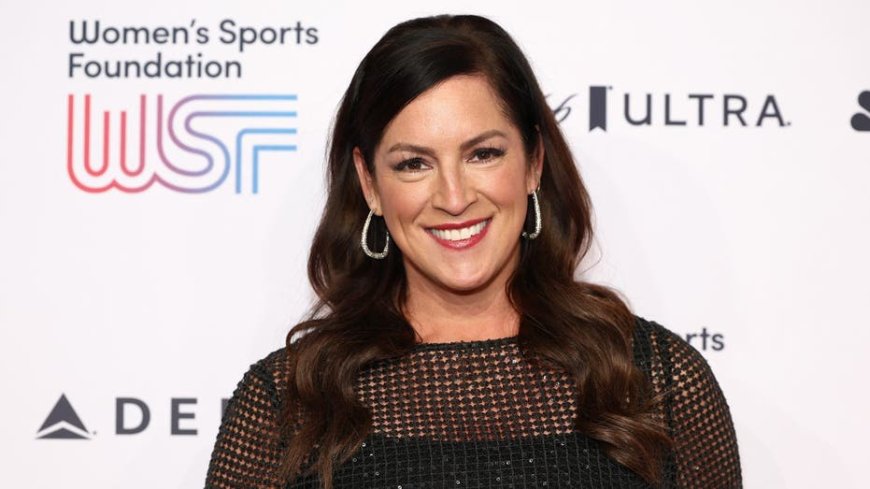
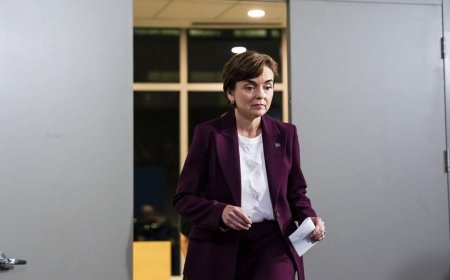
Sarah Spain thought Indiana Fever fans had been removed from games for violating the WNBA's fan code of conduct. Then general manager Amber Cox said no fans had been removed from the team's home games this season, citing the organization's security records.
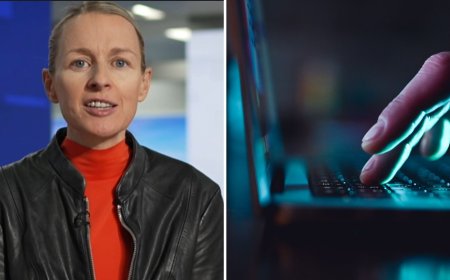
That news surprised Spain ... but it didn't stop her from criticizing Cox for sounding "defensive" in her rebuttal.
Well, wouldn't you be defensive if people kept trashing your fans and you had information that contradicted what they were saying?
THE CRAIG CARTON SHOW–UNFILTERED, UNAPOLOGETIC AND UNMISSABLE. DOWNLOAD HIS DAILY PODCAST NOW!
Spain certainly understands wanting to defend herself. When she didn't like one of my columns, she devoted part of her podcast to complaining about it.
But when Cox pushes back on the media, Spain has a problem with her tone.
"The attacks on our fan base have no basis in reality, and they need to stop, especially with members of the media," Cox said during her season-ending news conference. She clarified that she was referring to media who hadn't attended a game at Gainbridge Fieldhouse.
LEFT-WING SPORTS HOST SARAH SPAIN LAUNCHES DISGUSTING PERSONAL SMEAR OF SOPHIE CUNNINGHAM
Cox acknowledged that bad behavior happens and said anyone crossing the line, online or in an arena, should be held accountable. But she also had information about the fans actually attending her team's games.
"We did not have one fan pointed out by a player who violated the WNBA code of conduct this season. Not one fan was removed from a game," Cox said. "We take this really seriously, and that is backed up by our security stats and the lived experiences of countless fans who we host at every game."
"To be characterized in such a broad stroke is not fair," she added.
On a recent episode of her podcast, Spain credited Cox for providing that information. Perhaps more telling, though, is what Spain had assumed before hearing Cox's comments:
"I thought that there had been at least one incident where fans were removed and it had been clear that there had been an incident," Spain said.
Which incident? What did the fan do? Where did she get that impression? Spain didn't identify the incident she had in mind or where she had heard about it, leaving listeners unable to check it against Cox's statement.
Instead, Spain argued that Cox needed to acknowledge why players and visiting fans might feel there was a problem. So, even after presenting information that challenged the accusations against her fans, Cox still owed the people making those accusations a more accommodating response, according to Spain.
Later, while agreeing with guest Jordan Robinson's criticism, Spain said: "The defensiveness as opposed to the openness. Not we want to fix why people have the wrong idea. Instead, people have the wrong idea and we're mad at them."
Yes, Sarah. People can have the wrong idea, and the people they're talking about can be mad about it. Especially when those people have been repeatedly called racists and bigots.
Cox had already called for accountability for actual misconduct and cited the team's security records to defend her fans. Spain still wanted her to be more accommodating, but Cox's job isn't to make the people trashing her fans feel better about being challenged.
There's a bit of a Mandela Effect going on with the left-wing media and Fever fans. Allegations get remembered as proven misconduct, and fans who chose to leave get remembered as having been kicked out.
In May 2025, the WNBA investigated allegations of racist fan behavior during a Fever-Sky game. The league reviewed audio and video and gathered information from fans, team personnel and arena staff. The WNBA concluded that it could "not substantiate" the allegations.
I wrote about ESPN's coverage while that investigation was still underway because commentators were plowing ahead with the narrative that Fever fans are racist without waiting for any evidence.
ESPN’S FAVORITE INSIDER ACCIDENTALLY EXPLAINED WHY MOST AMERICANS DON’T TRUST THE MEDIA
This year, in August, Las Vegas Aces guard Jackie Young complained about a Fever fan during a game, and security pulled him aside. The fan voluntarily chose to leave and the Fever later explained that security found no code-of-conduct violation and hadn't ejected him.
But by then, media have already described the encounter as an ejection. People who missed the Fever's explanation were getting the wrong account of what happened.
Then there was A'ja Wilson's confrontation with a Fever fan during last week's playoff game. The Fever said security spoke with the fan and witnesses, found no code-of-conduct violation and didn't remove the fan from the arena.
Spain did distinguish that encounter from other incidents involving alleged racist rhetoric and also said individual encounters should be assessed separately. OK, then apply that to the broader accusations against Fever fans. Which incidents support them, and which have been repeated so often that people just assume they happened?
Online trolls posting hateful comments on social media don't establish how the crowd at Gainbridge behaves. Nor does a player confronting or complaining about a fan establish that the fan crossed the line. Yet, the media loves to immediately rush to the defense of these WNBA players without evidence.
Spain was surprised by Cox's account of the team's security record. I'd have liked to hear more about why she had a different impression and less about whether Cox sounded sufficiently open-minded while correcting it.
My suspicion is that she gets her news almost exclusively from left-wing outlets, so she hears plenty about the accusations against Fever fans and a lot less about the reporting that challenges them.
For what it's worth, Spain says she doesn't use X anymore, opting instead to post and read posts on Bluesky. Do with that information what you will.
In August, I argued that Spain's preferred approach to WNBA media sounded more like public relations than journalism. My commentary was based entirely on her own words, not something I invented out of thin air.
Spain wasn't pleased.
On her Sept. 16 show, she referred to "my own former colleague who now works at that outlet" before discussing coverage of her comments about WNBA media credentials. That was me. We both worked at ESPN, the outlet she was talking about is OutKick and the column she described was mine.
"They reworded that as me saying real media, which is just PR for the players," she complained. Then she accused the outlet of "asking the same question 8,000 times in order to keep doing the same story over and over for clicks."
Careful, Sarah, because that sounds awfully defensive to me. You should show more openness and ask why I had those thoughts rather than getting mad that I had them. Am I doing this right?
FORMER ESPN RADIO HOST SARAH SPAIN REFERRED TO J.D. VANCE AS A 'DEMON' AND 'THE DEVIL'
And that Sept. 16 episode had another example of Spain finding plenty of room for nuance when the subject was Sarah Spain. While criticizing Sydney Sweeney's Novig ad, she recalled starting her own on-camera career in cut-up jerseys and push-up bras.
Her response to people using those pictures against her?
"Hate the game, not the player."
But we're not done. She also defended her "publicity stunt" to get Super Bowl tickets. In 2007, Spain posted an eBay ad offering to be someone's date to the game, complete with a photo of herself in a Chicago Bears cheerleader costume, cleavage on full display.
Spain called it "this really clever viral idea that ended up getting me tickets to the game and all these connections." She was "using the system," she explained, and later used those contacts to get jobs.
So, Spain's defense was that women trying to break into sports faced fewer opportunities then and she basically had no choice but to try and use sex appeal to further her career.
CLICK HERE FOR MORE OUTKICK SPORTS COVERAGE
But, when discussing Sweeney, Spain complained that "we're back to this bulls--t where if a woman is involved in speaking to men, she should be naked."
I'd have more patience for that lecture if she extended Sweeney a little of the generosity she demands when discussing her own career. And I'd have more patience for her criticism of Cox if she hadn't demonstrated, at length, how much she values the chance to defend herself.
Spain was still talking about her critics in a more recent episode, during a conversation with influencer Coach Jackie. She described outlets as "so obsessed with what I'm doing" and said: "Like, the people who suck, I don't care how many stories they write about me, but I don't want to let the story get bigger because of it."
She's certainly keeping up with the coverage. She knew enough about my column to dispute its argument on her show. That's fine, but it makes her reaction to Cox harder to take seriously. She knows exactly why someone might want to challenge a story about them, especially if they believe the story is unfair or unfounded (though my column was neither).
Spain has talked about letting "garbage content" die in darkness. I take the opposite view: sunlight is the best disinfectant. If she makes a bad argument about Fever fans, I'm going to write about it. Her deciding that the people criticizing her radical opinions "suck" isn't much of a rebuttal.
During that same interview, while discussing pressure to comment on controversies, she also said, "I hate disappointing people I agree with."
Cox gave Spain a reason to revisit what she believed about Fever fans. Spain acknowledged the information, then got back to criticizing the Fever's response. I'd like to know what, if anything, would make her reconsider the coverage instead.
If Spain is worried about disappointing people who share her views, how willing is she to tell them something they don't want to hear?
What's Your Reaction?
 Like
0
Like
0
 Dislike
0
Dislike
0
 Love
0
Love
0
 Funny
0
Funny
0
 Angry
0
Angry
0
 Sad
0
Sad
0
 Wow
0
Wow
0