



















Psychologists Say Kids Who Grew up in the 1970s With No Scheduled Playdates and No Parental Supervision Had the Last Childhood That Was Fully Theirs


A mother in Saigon watches her four-year-old daughter invent rules for an imaginary game, negotiating with invisible characters and sorting out her own logic. She resists the urge to step in. Something is taking shape, and she knows what it looks like because her own mother once described the same thing from summers by a creek in rural Australia during the 1970s.
An analysis published on April 27 pulls together decades of developmental research to argue that children who grew up with unstructured childhood play, no adult-organized playdates, and no constant supervision built a stronger sense of personal control than children typically develop today. That sense, researchers say, has thinned out over the same decades that youth anxiety and depression have climbed.
Psychologists call it an internal locus of control: the belief that your own choices and actions genuinely shape what happens to you.
The Psychological Muscle Built by Boredom
Peter Gray, an evolutionary psychologist at Boston College, has spent his career studying what free play does. In a paper published in the American Journal of Play, he documented a steady decline of children’s free play starting around 1955. Across those same decades, childhood anxiety and depression and feelings of helplessness rose sharply.
Gray defines free play as activity children choose and direct themselves. Not adult-run sports. Not classes. When kids invent a game and enforce its rules among themselves, or sit with boredom until they find their own way out of it, they build capacities no structured environment can install.

“In play, children themselves must decide what to do and how, and they must solve their own problems,” Gray wrote. “Children who do not have the opportunity to control their own actions, to make and follow through on their own decisions, to solve their own problems, grow up feeling that they are not in control of their own lives and fate.”
A Generational Shift Toward Helplessness
The numbers backing this argument come from a youth mental health statistics analysis led by Jean Twenge at San Diego State University and published in Personality and Social Psychology Review. Twenge and her colleagues examined scores on the Rotter Internal-External Locus of Control Scale across samples of young Americans from 1960 through 2002.
The shift was not subtle. By 2002, the average young person registered more external, meaning they felt outside forces governed their lives, than 80 percent of young people in the early 1960s. The rise in youth helplessness was steeper in children than in college students and tracked closely with rising anxiety and depression. Gray points out that helplessness is one of the most reliable pathways into depressive states.
What 1970s Childhoods Actually Produced
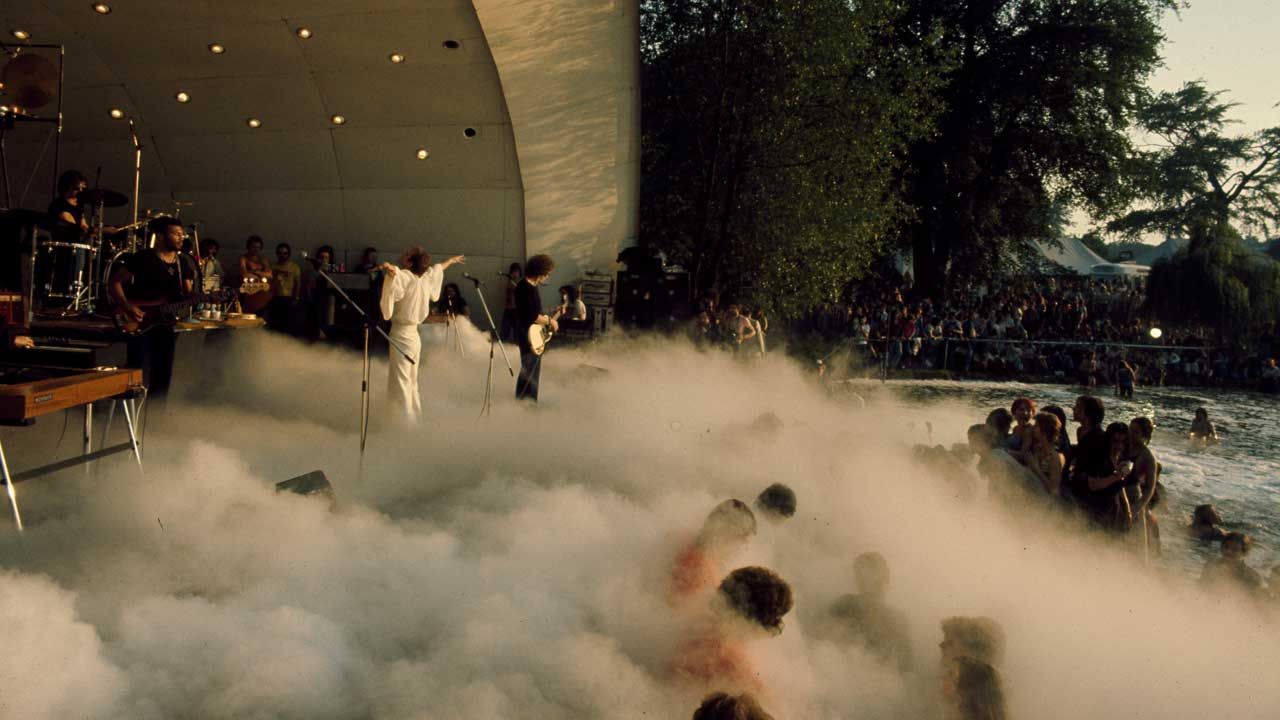
Children in the 1970s moved through long stretches of time no adult had arranged. Out after breakfast, back when streetlights came on. No phones. No schedules. No adults tracking where they went or settling arguments. They fought over rules, took physical risks, built friendships, and pulled themselves out of boredom without help.

The recent analysis calls this ownership. Children owned their time and the decisions filling it. No one curated their experience, so they managed it themselves. This produced a quiet conviction that they could handle whatever the day threw at them. Gray describes it as internal locus of control acquired through practice, learned from repeated, real experience of making things happen and absorbing consequences.
The Schedule That Replaced the Creek Bed
The transfer of control from children to adults picked up speed through the 1980s and never reversed. Fears about safety, intensified schooling, and the idea that a worthwhile childhood is a fully scheduled one swallowed the empty hours.
Sociologists at the University of Michigan measured part of the change. From 1981 to 1997, time spent playing by children aged six to eight fell 25 percent. Schoolwork at home rose 145 percent. Shopping with parents increased 168 percent. Outdoor play, the least structured form, almost certainly shrank faster than play overall.

The result, according to Gray’s American Journal of Play paper, was that children stopped being the architects of their own days. They became participants in days adults had already designed. Skills that come from navigating things alone, handling failure, resolving conflict without an authority figure, and recovering from mistakes cannot be taught into existence. They need actual freedom, including the freedom to get things wrong.
The Data on Youth Mental Health
Twenge’s analyses of the Minnesota Multiphasic Personality Inventory, given to high school and college students for decades, show the average student now scores roughly a full standard deviation higher on anxiety and depression measures than students fifty years ago. Five to eight times as many young people in the 2000s crossed the threshold for a likely clinically significant anxiety or depressive disorder compared to those tested in the 1950s.
Teen suicide rates paint the same picture. From 1950 to 2005, the suicide rate for children under fifteen quadrupled. For teens and young adults, it more than doubled. Over the same period, adult rates for people over forty declined. Twenge detected no link between these increases and economic cycles, wars, or other large-scale events. The changes track with how young people see themselves and their own agency, not with objective conditions.
Narcissism and the Fragile Self
The research records a sharp rise in narcissistic personality traits among young people between 1982 and 2007. By 2007, close to 70 percent of college students scored higher in narcissism than the average college student in 1982.
Gray’s paper explains the apparent contradiction. Narcissism is not genuine self-regard. It is a fragile, defensive version of it. Narcissists often slide into anxiety and depression when reality collides with their inflated self-image, and they tend to blame their lack of achievement on forces beyond their control, a pattern that fits with an external locus of control.
Social play in child development works against narcissism by its very nature. Free-playing children do not tolerate grandiosity. A child who feels bullied or slighted can quit, and if too many quit, the game ends. Staying in the game requires every child to pay attention to the needs and reactions of others. This is cooperation practiced among equals. No amount of adult praise substitutes for it.
Enjoyed this article? Subscribe to our free newsletter for engaging stories, exclusive content, and the latest news.
What's Your Reaction?
 Like
0
Like
0
 Dislike
0
Dislike
0
 Love
0
Love
0
 Funny
0
Funny
0
 Angry
0
Angry
0
 Sad
0
Sad
0
 Wow
0
Wow
0


