




























Proba-3 Sees The Sun Like Never Before, and Finds Faster-Than-Expected Solar Winds

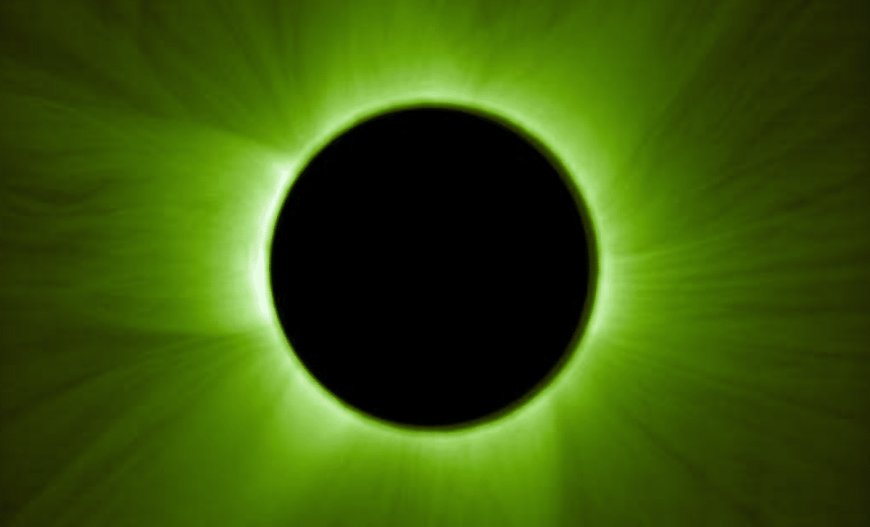
For decades, the solar wind has remained one of the most elusive forces in our solar system, shaping space weather and influencing everything from satellite operations to power grids on Earth. Now, the European Space Agency’s Proba-3 mission is changing that narrative by creating artificial solar eclipses in space, offering scientists an uninterrupted view of the Sun’s outer atmosphere. These observations are already exposing unexpected behavior in the solar wind, early findings detailed in The Astrophysical Journal Letters suggest that long-held assumptions about its speed and origin may need to be revised.
A Precision Dance In Space Enables Continuous Solar Eclipses
The Proba-3 mission represents a technological leap that transforms a rare natural event into a routine scientific tool. Instead of waiting for total solar eclipses on Earth, ESA engineers designed two spacecraft, Occulter and Coronagraph, to fly in perfect formation, separated by just 150 meters while maintaining submillimeter accuracy. This alignment allows the Occulter to block the Sun’s intense light, casting a shadow onto the Coronagraph and revealing the faint outer atmosphere known as the solar corona.
Operating in a highly elliptical orbit that stretches more than 60,000 kilometers from Earth, the system performs observations near apogee, where conditions are most stable. This configuration removes atmospheric distortion entirely, offering a clean, uninterrupted view that ground-based instruments cannot achieve. The result is a continuous stream of high-resolution data, already totaling over 250 hours across 57 artificial eclipses, far exceeding the few minutes of natural eclipse totality available on Earth.

First Scientific Results Reveal Unexpected Solar Wind Behavior
The mission’s early findings, published in The Astrophysical Journal Letters, mark a turning point in solar physics. At the heart of these observations is the ASPIICS coronagraph, capable of imaging regions as close as 1.1 solar radii from the Sun’s surface, an area previously inaccessible with such clarity. This proximity allows scientists to directly observe where space weather originates, bridging a long-standing observational gap.
One of the most striking discoveries involves the behavior of the so-called slow solar wind, a stream of charged particles whose origin has remained elusive for decades. Contrary to expectations, Proba-3 reveals that this “slow” wind is moving far faster than predicted.
“In the inner corona, a region very difficult to observe, we saw slow solar wind gusts moving three to four times faster than expected,” says Andrei Zhukov (Royal Observatory of Belgium and lead researcher in the study) in a recent press release.
These measurements suggest velocities between 250 and 500 km/s, far above the previously theorized 100 km/s. This discrepancy challenges existing models and hints at more dynamic processes occurring close to the Sun.

Unlocking The Mysteries Of The Solar Corona
The corona itself presents one of the most persistent puzzles in astrophysics: it is dramatically hotter than the Sun’s visible surface. Proba-3’s ability to observe this region continuously is providing critical data to address this coronal heating problem. Scientists are now examining how magnetic reconnection—where magnetic field lines break and reconnect, may inject energy into the plasma, driving both heating and particle acceleration.
The mission also sheds light on coronal mass ejections (CMEs), massive bursts of solar material that can disrupt satellites, communications, and power grids on Earth. By observing the earliest stages of CME formation, researchers hope to improve forecasting models and better understand how these eruptions evolve.
Equally significant is the detection of structured features such as bright streamers and rays, which appear to trace the pathways of solar wind escaping the Sun. These features are now being analyzed in unprecedented detail, offering clues about the interaction between magnetic fields and plasma flows.

A New Era For Space Weather Forecasting
Understanding space weather is not just an academic pursuit, it has direct implications for modern infrastructure. Satellites, GPS systems, and even terrestrial power grids are vulnerable to solar activity. By capturing the dynamics of the low corona, Proba-3 provides data that could significantly enhance predictive models.
Unlike previous missions such as SOHO, GOES-19, or Aditya-L1, Proba-3 pushes observational limits closer to the Sun than ever before. This unique vantage point allows scientists to connect small-scale processes in the corona with large-scale effects across the solar system.
With its nominal mission set to extend beyond 2026, Proba-3 is only beginning to reveal its potential. As more data is analyzed, researchers expect further surprises that could reshape our understanding of the Sun’s influence on space and Earth.
Enjoyed this article? Subscribe to our free newsletter for engaging stories, exclusive content, and the latest news.
What's Your Reaction?
 Like
0
Like
0
 Dislike
0
Dislike
0
 Love
0
Love
0
 Funny
0
Funny
0
 Angry
0
Angry
0
 Sad
0
Sad
0
 Wow
0
Wow
0