



























Albert Einstein, scientist: “Education is what remains after you have forgotten what you learned in school”

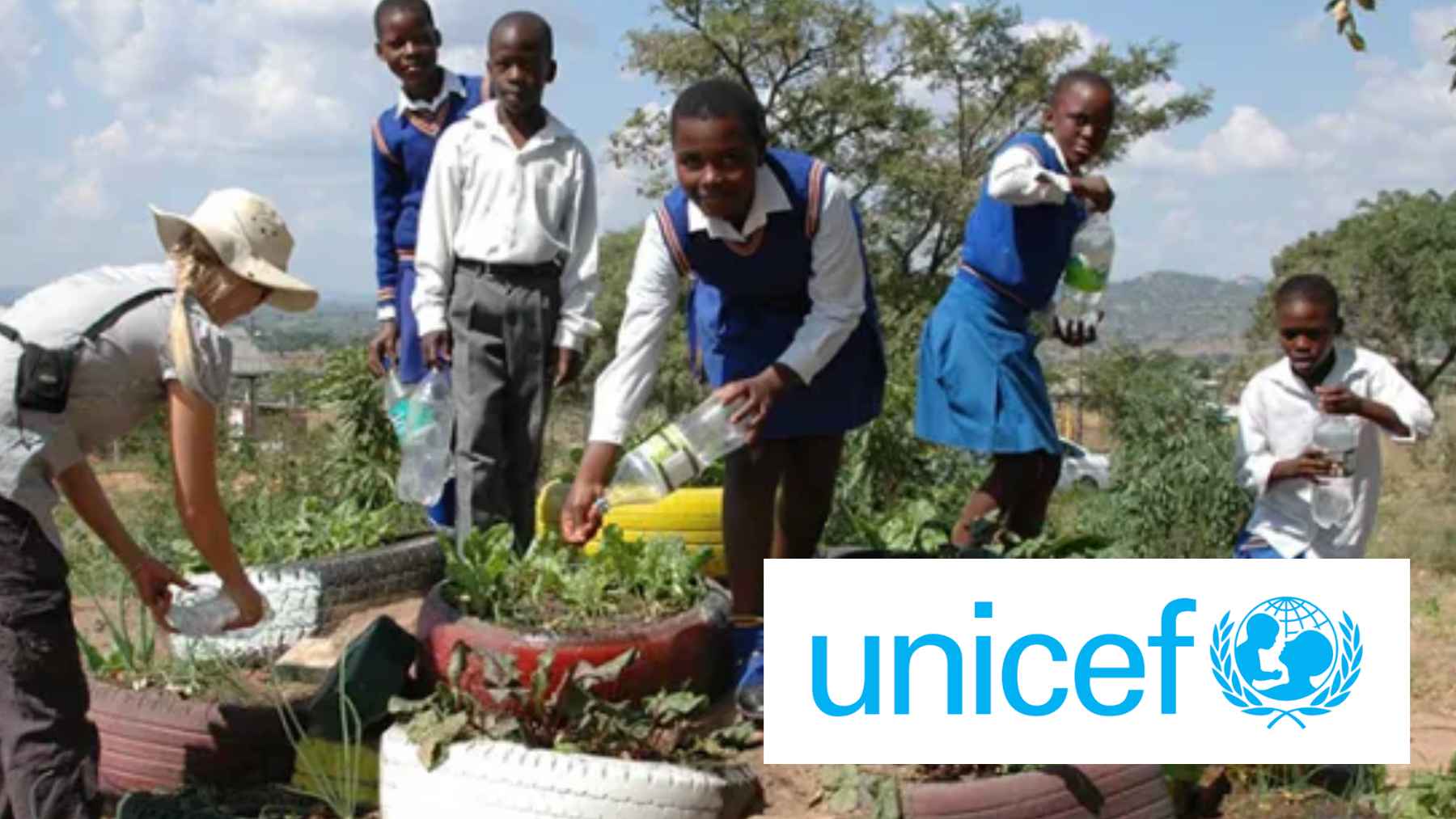
UNESCO just put a number on the idea of “green schools”. Nearly 112,000 schools in 98 countries have aligned with UNESCO’s Green School Quality Standard through the Greening Education Partnership, according to an Earth Day update released in April 2026.
That sounds like education policy, not environmental news. But as carbon pollution keeps climbing and heat creeps into classrooms, schools are turning into a practical place to build climate skills that last.
A global push to make schools “green”
UNESCO says its Green School Quality Standard sets minimum requirements across four areas, governance, facilities and operations, teaching, and local community engagement. The idea is to make sustainability part of the building and the lesson plan, not a once a year poster contest.
The scale is what grabs you. UNESCO’s update counts nearly 112,000 schools and colleges participating, and it urges countries to aim for 50% of schools to be “green” by 2030. A global tracker is meant to follow progress on schools, curricula, and teacher capacity.
The statement also points to real examples, including Ágora School near São Paulo, where students spend significant time outdoors observing wildlife and seasonal cycles, while also running recycling and waste systems. It’s a simple formula: learn the science, then practice it.
The climate math behind the urgency
The education shift is happening while greenhouse gases keep piling up. The Global Carbon Project projected fossil fuel carbon dioxide emissions of 37.4 billion metric tons in 2024, with total CO2 emissions reaching 41.6 billion metric tons (about 45.9 billion short tons) when land use change is included.
Concentrations are rising too. The World Meteorological Organization reported a globally averaged CO2 level of 423.9 ppm in 2024, about 152% of the preindustrial level, after a record annual jump of 3.5 ppm from 2023 to 2024.
Copernicus data analyzed by ECMWF found 2025 was the third-warmest year on record globally, averaging 14.97°C (about 58.9°F) and about 1.47°C (about 2.65°F) above the 1850 to 1900 reference, while 2024 remained the warmest year. When you are trying to study in sticky summer heat, those decimals stop feeling abstract.
Einstein’s quote and what it really points to
The line “Education is what remains, if one has forgotten everything he learned in school” is often repeated as an Einstein mic drop, but its trail is messy. Quote Investigator notes earlier versions about “culture”, and says Einstein used the education version in a 1936 essay while crediting an unnamed “wit.”
In that same essay, he compared building the mind to training muscles, and treated information as only a small slice of real education. Another famous Einstein line, “imagination is more important than knowledge,” shows up in discussion of his 1931 book “Cosmic Religion” and underlines a mindset that science needs to move forward.
When students teach their parents, change can spread
So what does that look like in practice? A 2025 research synthesis on education and climate change says multiple randomized controlled trials have documented how students in environmental education programs share knowledge and influence parents’ attitudes and behaviors.
It argues this “spillover” can be especially promising because young people are often less locked into political identities that shape how evidence is interpreted.
The family link matters for a simple logistical reason too. The same synthesis points out that at least 83% of U.S. families live within 2 miles of a public school, making schools one of the most common community touchpoints. In other words, what kids learn at school has lots of chances to leak into dinner table talk.
The authors also argue schools can shrink their own environmental footprint through steps like energy conservation and reducing food waste. In everyday life, that can mean student-led audits that flag where a building is wasting power and driving up the electric bill, along with a cafeteria tracking project that changes what ends up in the trash.
Ever sat in a pickup line that crawls like a traffic jam and smells of exhaust fumes, then wondered how small habits compound?
One U.S. test case in New Jersey
New Jersey offers a concrete example of how climate learning can move beyond a single unit in earth science. The state education department says that with adoption of the 2020 New Jersey Student Learning Standards, New Jersey became the first state to include climate change across content areas, and it encourages interdisciplinary, action-oriented learning experiences.
Done well, that approach can dodge the trap of rote messaging. A lesson that asks students to compare sources, model tradeoffs, and connect local impacts to global systems is closer to “training the mind to think” than to memorizing slogans.
What readers should watch for next
The hard part is scaling, especially with limited time and training. UNESCO has warned that only 53% of national curricula it reviewed even referenced climate change, and fewer than 40% of teachers surveyed felt confident teaching about the severity of climate change.
That is why the green school movement is worth watching beyond the education beat. If your local district starts talking about shade trees, cooler classrooms, electrified buses, or project-based climate lessons, ask whether the learning will stick when the quiz is forgotten.
The official statement was published by UNESCO.
What's Your Reaction?
 Like
0
Like
0
 Dislike
0
Dislike
0
 Love
0
Love
0
 Funny
0
Funny
0
 Angry
0
Angry
0
 Sad
0
Sad
0
 Wow
0
Wow
0