




A huge ocean sunfish has washed up at Marina di Ravenna, and the appearance of this elusive creature on the Italian coast has turned a beaching into a biological mystery

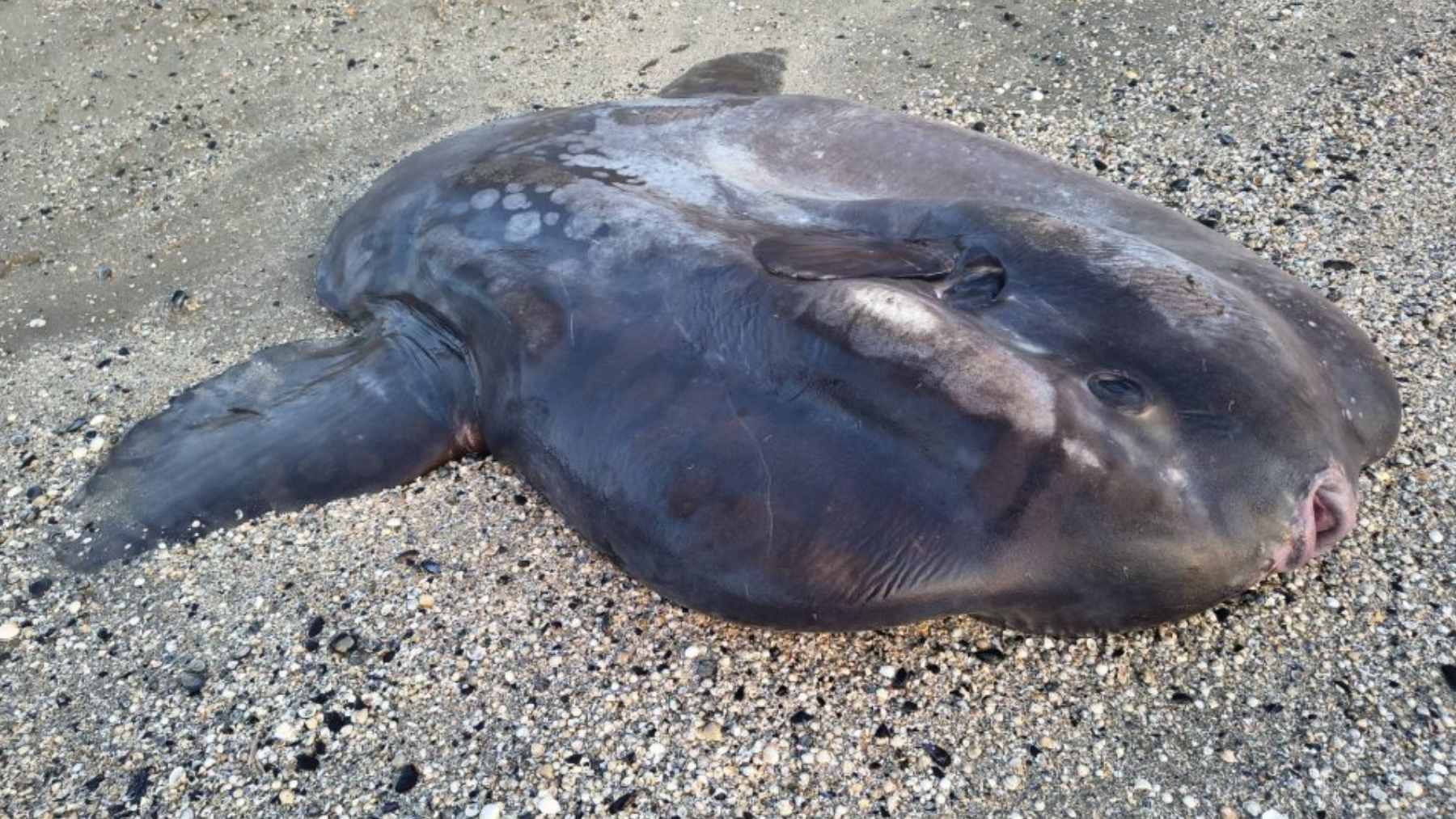
A giant ocean sunfish washed up dead at Marina di Ravenna on Italy’s Adriatic coast, turning a normal beach day into a marine mystery. Reports put it at about 8.2 feet and roughly 882 pounds, and it was recovered by the Experimental Center for Habitat Protection (CESTHA) with help from the port authority.
Sunfish live far offshore and roam huge distances, so scientists rarely get a full-body look at an adult. A stranding can double as a snapshot of what is happening at sea, even when it starts with a loss.
A rare giant on a crowded beach
Italian media say the sunfish was found stranded on March 10, drawing attention fast on a shoreline better known for weekend walks. Early checks did not show obvious signs of a propeller strike or net wounds, but that is only the first step.
The carcass has been taken in for veterinary and lab work so the cause of death can be assessed with evidence.
CESTHA staff had reportedly tried to help a distressed sunfish in the same area days earlier, attempting to guide it back toward deeper water. Whether it was the same individual is not confirmed, and that uncertainty matters. Pelagic fish can end up near shore for many reasons, including illness, exhaustion, disorientation, or hidden injuries.
Built for open water
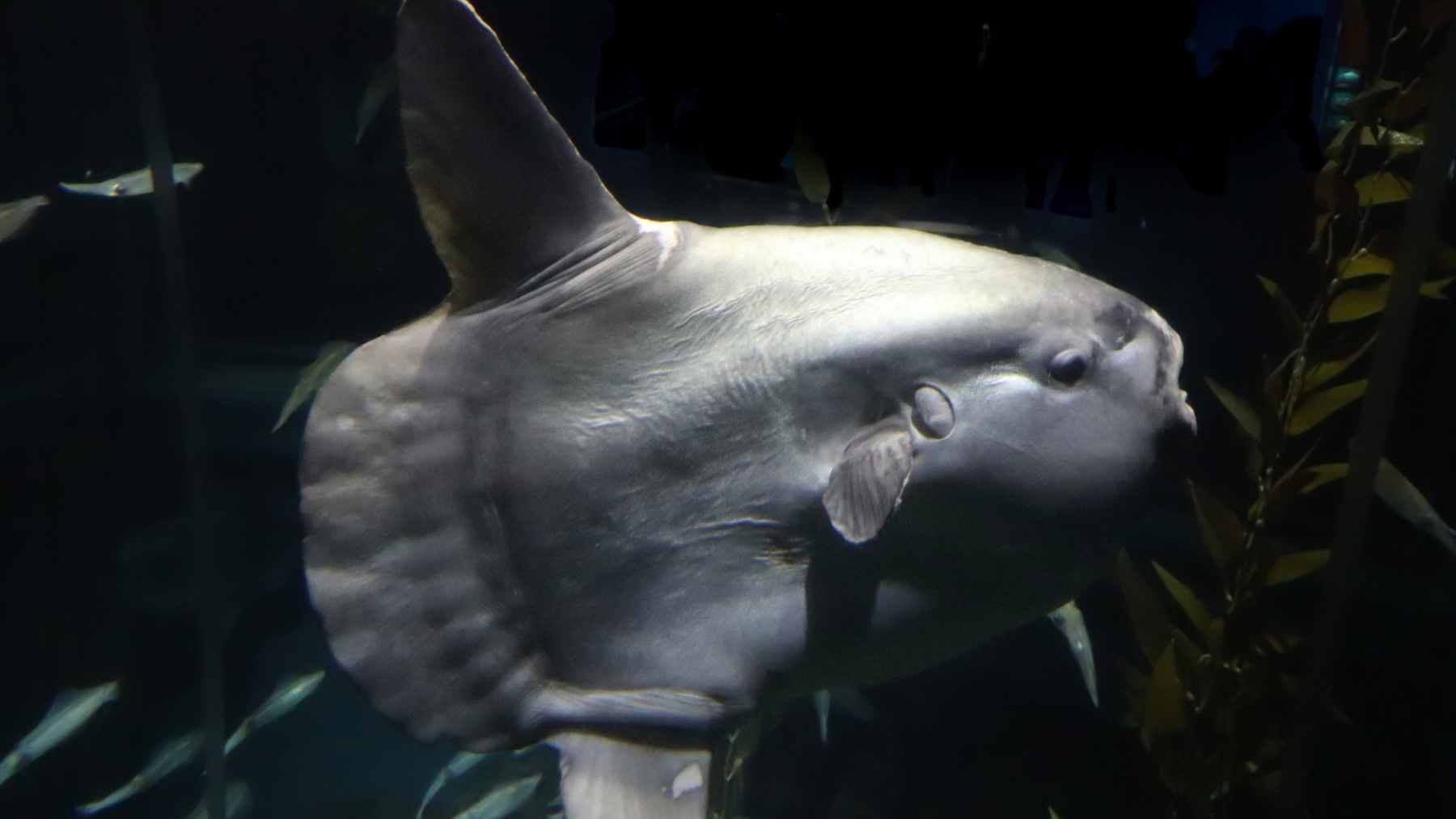
Sunfish look almost like a living disk, with a body flattened from side to side and a rear end that is cut off rather than tapered. Instead of a true tail fin, they have a fan-shaped structure called the clavus, and they propel themselves mainly with their tall dorsal and anal fins.
The Venice Natural History Museum compares this fin motion to “the wings of birds,” giving the fish an almost flying style underwater.
The same museum notes that the skin has no scales and is roughened by microscopic spines, and that the skeleton is partly cartilaginous. It also notes that sunfish often cruise near the surface and may appear almost motionless, which can look strange if you do not know the behavior.
A 2026 paper in Frontiers reports that the genus Mola is generally treated as having three valid species, which is why careful identification matters.
Fast growth on food that is mostly water
Sunfish are known for eating gelatinous animals like jellyfish, salps, and ctenophores, prey that is largely water and not very energy dense. In the Mediterranean, a stable isotope study reported that ocean sunfish “primarily relied on gelatinous zooplankton,” suggesting soft prey can be important even when it is hard to spot in stomach samples.
At the same time, field reports note they can also take squid, small fish, and crustaceans, so their diet is not as narrow as the stereotype.
So how does a fish get this big? The Venice museum reports that in captivity a sunfish can reach about 882 pounds in 15 months, which works out to more than 1.8 pounds of growth per day. Researchers still caution that wild growth rates are poorly documented, and that is why every specimen can add to the picture.
The Adriatic’s gelatinous backdrop
The Venice museum links sunfish movements to “blooms” of the gelatinous organisms they track and notes that reports offshore from Italian coasts seem to be increasing, including occasional entries into the Venice Lagoon in recent decades.
If you have noticed more jellyfish along the shore in summer, you are seeing one edge of a bigger shift in what the water column is producing. More gelatinous life can ripple through the food web, changing who eats what and where.
One species that scientists in northern Italy watch closely is the invasive comb jelly Mnemiopsis leidyi.
In a January 2026 report, Italy’s National Institute of Oceanography and Applied Geophysics said Mnemiopsis has been present in the Adriatic for years and can bloom in late spring and again from late summer into early fall, patterns the institute linked to warmer temperatures and favorable salinity.
That does not explain this sunfish’s death on its own, but it is part of the ecological stage this story is playing out on.
What a necropsy can reveal
A necropsy can show whether a stranded fish died from infection, organ failure, parasites, starvation, or internal trauma that was not visible on the outside. Scientists can also examine the digestive tract for clues about what it was eating and whether it swallowed anything it should not have.
Italian reporting has mentioned the possibility of a debilitating pathology, but testing is still underway.
The stakes go beyond curiosity because the ocean sunfish is listed as Vulnerable on the IUCN Red List, as compiled by FishBase. Bycatch is a documented problem in multiple fisheries, and long-term ecological research has described sunfish as a major component of bycatch in some large-mesh gillnet operations.
A 2023 study of 53 sunfish in the Northeast Atlantic found microplastics in 79% of individuals, suggesting these giants are not insulated from the debris field most marine animals now face.
If you see a sunfish in trouble
Sunfish can float near the surface and look “stuck” when they are actually behaving normally, so the first move is to observe calmly and avoid crowding the animal. But if it is stranded on sand or trapped in very shallow water, it is safer to call local authorities or a marine wildlife rescue group than to try to push it back yourself.
A clear location and a photo from a respectful distance can help responders without adding stress.
At the end of the day, this is also a story about what we send into the sea, intentionally or not. Fewer single-use plastics, properly secured trash, and responsible fishing practices reduce the chance that jelly-eaters will encounter dangerous debris in the first place.
The study was published in Frontiers in Marine Science.
What's Your Reaction?
 Like
0
Like
0
 Dislike
0
Dislike
0
 Love
0
Love
0
 Funny
0
Funny
0
 Angry
0
Angry
0
 Sad
0
Sad
0
 Wow
0
Wow
0